Best Flooring for Toronto Condos: Noise Rules, LVP & Engineered Hardwood
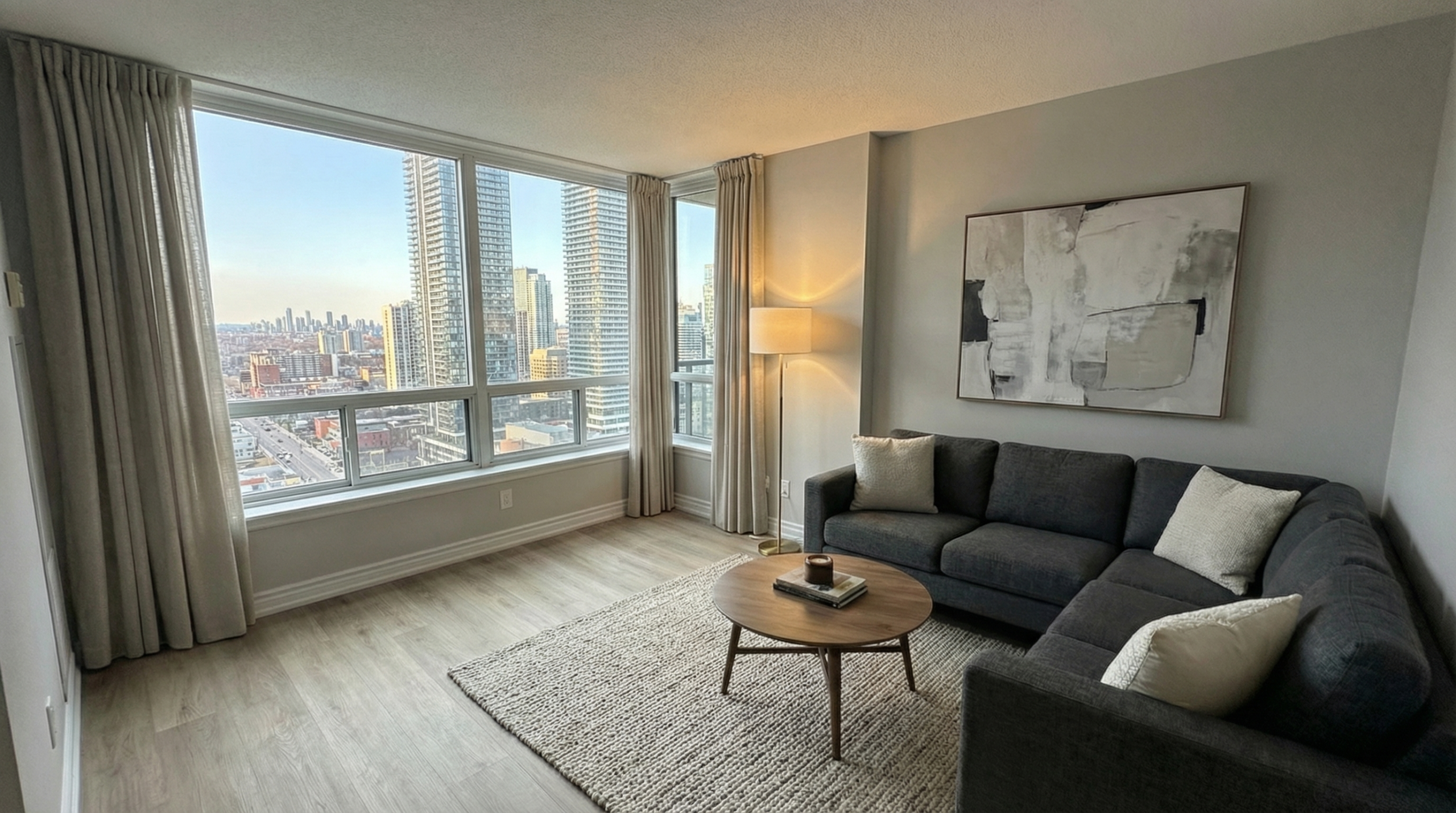
Replacing flooring in a Toronto condo isn't like replacing flooring in a house. Your condo board has strict noise rules. You need approval before you start. You have to book the freight elevator. And if your new floor doesn't meet acoustic requirements, you could face fines — or be forced to rip it all out.
At Flooring Office, we install flooring in condos across the GTA — from downtown high-rises to midrise buildings in North York, Etobicoke, and Mississauga. Here's everything you need to know before you choose.
The Rules You Need to Know First
Most Toronto condo boards require your flooring to meet minimum sound ratings. These exist because the floor of your unit is the ceiling of your neighbour below — and impact noise (footsteps, furniture, dropped items) travels through concrete faster than sound travels through air.
Critical: These ratings apply to the entire floor system — flooring + underlayment together, not separately. A product that claims "sound reducing" on the box isn't enough. Your condo board needs certified lab test results for the specific flooring + underlayment combination. Generic claims get rejected.
Before You Buy: The Condo Approval Process
Get your building's flooring rules
Request the declaration and bylaws from your property manager. Look for minimum STC/IIC ratings, approved materials, and any restrictions (some buildings ban hardwood entirely).
Choose flooring + underlayment as a tested system
Don't pick flooring first and "solve sound later." Select a flooring and acoustic underlayment combination that has been lab-tested together and has certified STC/IIC documentation.
Submit your approval package
Include product datasheets, acoustic test results, installation method, subfloor prep plan, and contractor insurance/WSIB documentation. Submit everything at once to avoid back-and-forth.
Book the freight elevator
Most buildings require 2+ weeks advance booking. Schedule delivery and installation the same day when possible to avoid storing materials in your unit.
Install within approved hours
Most Toronto condos restrict renovation work to weekdays, typically 9am–5pm. Some buildings require quiet periods. Confirm before scheduling your installer.
We provide all the acoustic documentation your board needs for approval.
Free quotes — we know GTA condo requirements inside and out.
Get Your Free Quote →Best Flooring Options for Condos
Click each option to see how it performs in a condo environment:
LVP is the most popular condo flooring choice in the GTA for good reason. It's waterproof, thin (preserves ceiling height), and achieves excellent acoustic ratings when paired with the right underlayment. Most condo boards approve LVP without issue.
Modern SPC-core LVP with embossed-in-register textures looks nearly identical to real hardwood. It handles condo temperature fluctuations from HVAC cycling without expanding or gapping.
Engineered hardwood is usually approved in condos when paired with a quality acoustic underlayment. It gives you the real wood look and feel that commands higher resale value. White Oak in matte or wire-brushed finishes is the top choice for Toronto condos in 2026.
Some buildings restrict hardwood — always check your bylaws first. Glue-down installation over concrete is the most stable and acoustically effective method for condos.
Laminate works in condos but requires a high-performance acoustic underlayment to pass noise tests. Cheap laminate with basic foam underlay often fails condo board requirements — check specific product ratings before purchasing.
Not waterproof (water-resistant at best), so avoid in kitchens and bathrooms. Can sound hollow without quality underlayment.
Tile is the hardest flooring to get approved in a condo. It's extremely rigid and transmits impact noise directly through the slab. Meeting IIC requirements with tile requires expensive specialized acoustic membranes — often adding $3–$5/sq ft to your underlayment cost alone.
Can work in bathrooms and kitchens where it's expected, but rarely approved for full-unit installation in Toronto high-rises.
Carpet has the highest acoustic ratings of any flooring — condo boards love it. Great for bedrooms and dens where comfort and noise reduction matter most. Carpet tiles are the smartest option because damaged sections can be individually replaced.
Not ideal for kitchens, bathrooms, or main living areas due to staining, odour trapping, and maintenance. Use carpet in bedrooms + LVP everywhere else for the best combination.
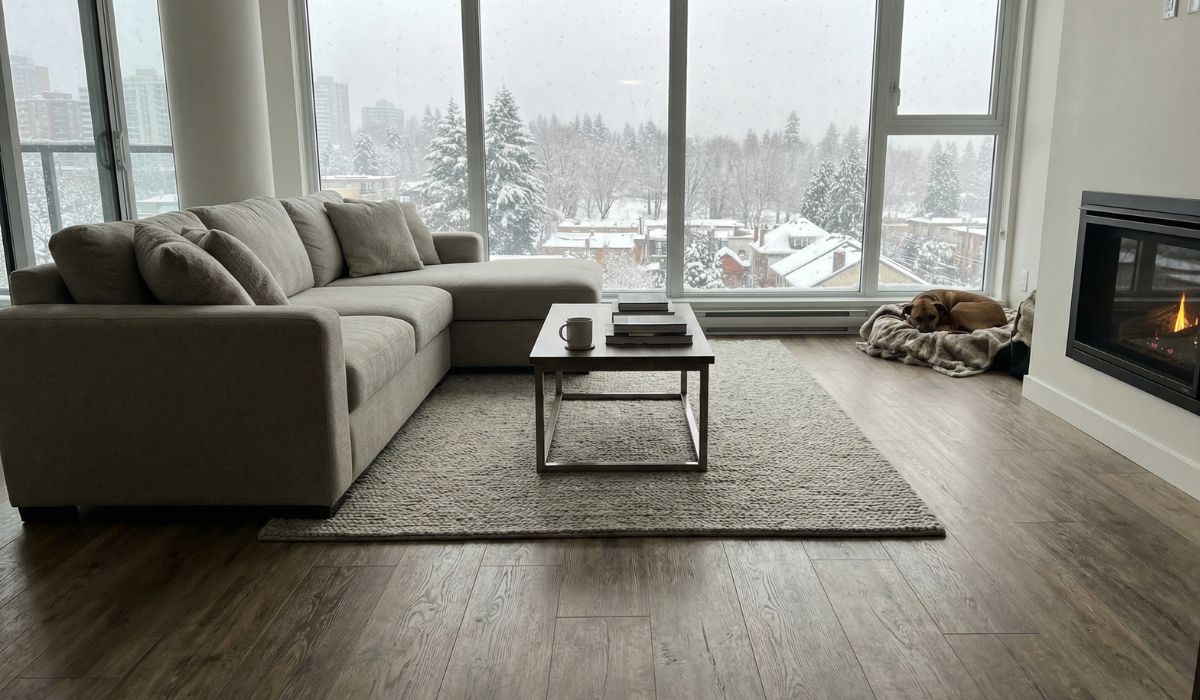
Why LVP Is the #1 Condo Choice
Waterproof
Handles kitchen spills, bathroom moisture, and condo HVAC humidity without warping.
Meets Noise Rules
STC 50–55 and IIC 72–78 with proper acoustic underlayment. Most boards approve it.
Thin Profile
4–7mm preserves ceiling height and door clearance — critical in condos with tight tolerances.
Fast Install
Click-lock floating system. Full condo done in 1–2 days. Less disruption, less elevator time.
Temperature Stable
Condo HVAC cycles cause temperature swings. LVP doesn't expand or contract — no gaps, no cupping.
Resale Friendly
Modern, clean LVP is well-received by GTA condo buyers. Especially in units under $800K.
What Condo Flooring Costs in the GTA
Condo installations typically cost 10–20% more than houses due to elevator fees, access restrictions, acoustic underlayment requirements, and working-hour limitations.
| Unit Size | LVP | Eng. Hardwood | Laminate |
|---|---|---|---|
| Studio (400–500 ft²) | $1,600–$4,000 | $3,200–$8,000 | $1,200–$3,500 |
| 1-Bed (550–700 ft²) | $2,200–$5,600 | $4,400–$11,200 | $1,650–$4,900 |
| 2-Bed (800–1,000 ft²) | $3,200–$8,000 | $6,400–$16,000 | $2,400–$7,000 |
| 3-Bed (1,100–1,400 ft²) | $4,400–$11,200 | $8,800–$22,400 | $3,300–$9,800 |
Don't forget: Acoustic underlayment adds $1–$3/sq ft on top of flooring costs. Budget for it upfront — it's mandatory in most GTA condos, not optional. Cheap foam underlay will get your application rejected.
What's Trending in GTA Condos for 2026
Warm Neutrals
Honey, natural oak, and warm beige are replacing cool grays. Makes small condo spaces feel airy and inviting.
Wide Planks
7"+ planks elongate rooms and make 600 sq ft units feel significantly bigger. Fewer seams = cleaner look.
Matte Finishes
Low-sheen and wire-brushed textures hide dust and scuffs — critical in a condo where natural light shows everything.
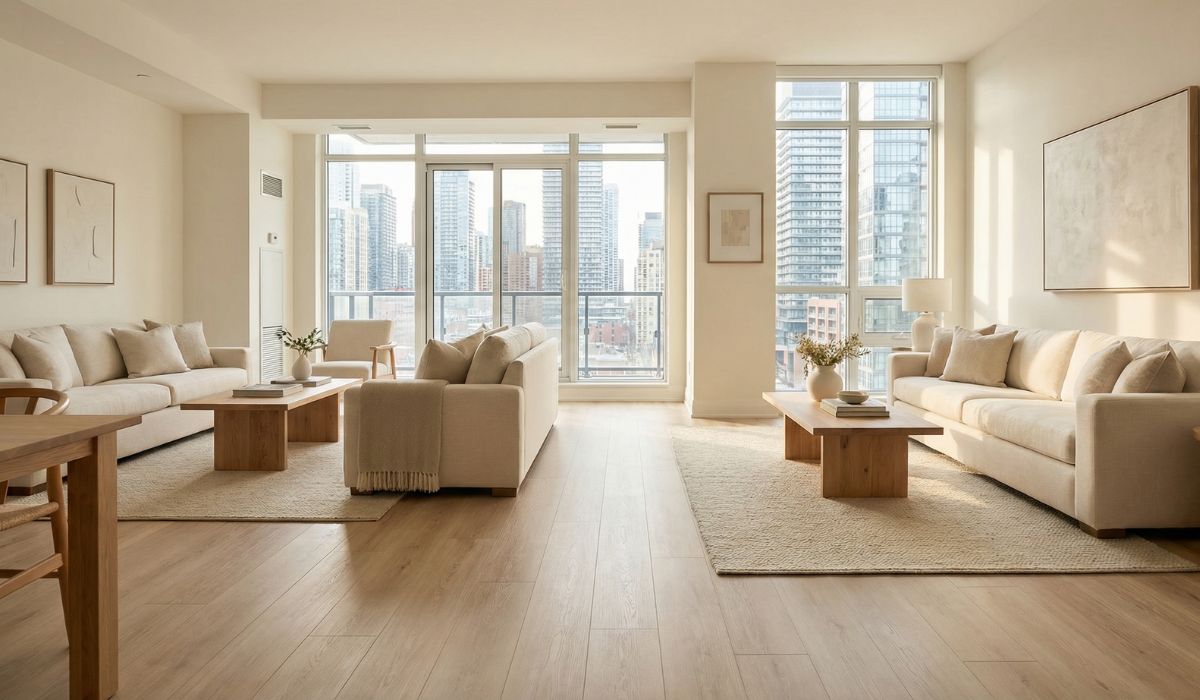
The Smart Condo Play
LVP throughout + carpet tiles in bedrooms. LVP gives you waterproof performance, condo board approval, and the modern hardwood look — at half the cost of real wood. Carpet tiles in bedrooms deliver unbeatable sound absorption and can be individually replaced when stained. This combination satisfies your board, your neighbours, and your budget.
Full LVP vs hardwood breakdown: LVP vs Hardwood: Which Is Right for Your GTA Home?
Cost guide: How Much Does Hardwood Flooring Installation Cost in the GTA?
Landlord with a condo rental? LVP Flooring for Rental Properties: Best ROI for Ontario Landlords
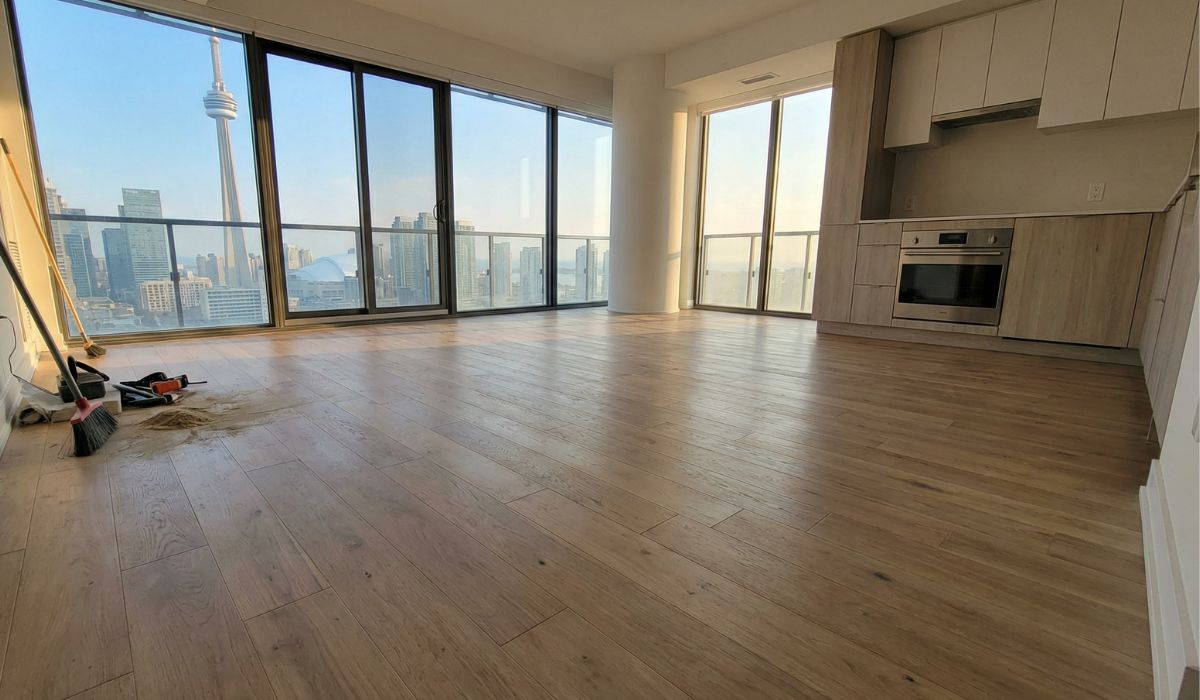
Get an accurate quote for your condo flooring project.
Downtown · North York · Etobicoke · Mississauga · Scarborough · Vaughan · Markham
Get Your Free Quote →