Best Flooring for Basements in Ontario: LVP, Engineered Hardwood, or Laminate?
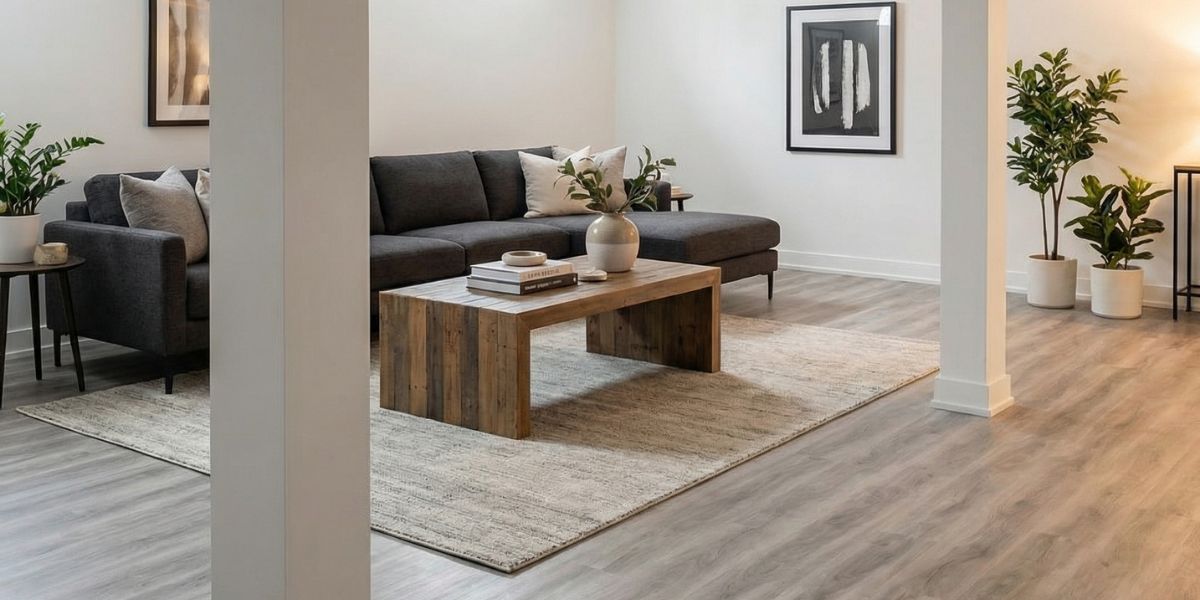
Your basement is the trickiest room in your house to floor — and in Ontario, it's even more challenging. Between moisture seeping through concrete slabs, humidity swings from our dry winters to muggy summers, and the ever-present risk of a sump pump failure or spring thaw flood, the wrong flooring choice can mean mold, warping, and an expensive do-over.
The good news? There are excellent options that handle everything an Ontario basement can throw at them. At Flooring Office, we install basement flooring across North York, Woodbridge, Vaughan, and the entire GTA — and we see which materials hold up and which ones don't. Here's what you need to know.
Finishing your basement? Let us help you choose the right floor.
Free in-home estimates across the GTA — we'll assess your subfloor and moisture levels.
Get Your Free Quote →Why Basement Flooring Is Different
Before we compare options, it's important to understand why you can't just put any floor in a basement. Below-grade spaces have unique conditions that above-grade rooms don't:
- Moisture from the slab: Concrete is porous. Even when it looks dry, moisture vapour passes through it constantly. This is especially true in spring and during heavy rain seasons in the GTA.
- Flooding risk: Sump pump failures, sewer backups, burst pipes, and spring thaw can all put water on your basement floor. It's not a matter of if — it's a matter of when.
- Humidity fluctuations: Ontario basements swing from very dry in winter (heating season) to very humid in summer. Materials that can't handle this movement will gap, cup, or buckle.
- Cold concrete: Basements are cooler than the rest of your home. Some flooring options feel ice-cold underfoot, while others provide insulation and comfort.
- Lower ceiling height: Many GTA basements have limited headroom. Thicker flooring systems eat into your ceiling clearance.
With these challenges in mind, let's compare the three most popular basement flooring options for Ontario homes.
The Three Best Options Compared
| Factor | LVP Best Overall | Engineered Hardwood | Laminate |
|---|---|---|---|
| Waterproof | Yes — 100% | No — water-resistant only | No — water-resistant versions available |
| Flood Survival | Pull up, dry slab, reinstall | Likely needs full replacement | Needs full replacement |
| Installed Cost (per sq ft) | $4 – $8 | $8 – $16 | $3 – $7 |
| Installs Over Concrete | Yes — directly with vapour barrier | Yes — with proper moisture testing | Yes — with vapour barrier |
| Warmth Underfoot | Good (especially WPC with cork backing) | Good | Moderate |
| Thickness / Profile | 4–7mm — preserves ceiling height | 12–15mm — eats more headroom | 7–12mm — moderate |
| Scratch Resistance | Excellent | Moderate (can refinish) | Good |
| Mold / Mildew Risk | None — inorganic material | Moderate — organic wood can grow mold | Low to moderate — core can swell if wet |
| Look & Feel | Realistic wood/stone looks | Real wood — premium feel | Printed wood look — decent realism |
| Lifespan | 15–25 years | 20–50 years (if kept dry) | 10–20 years |
| Best For | 99% of Ontario basements | Dry, waterproofed basements that double as living space | Budget-friendly finished basements |
Option 1: Luxury Vinyl Plank (LVP) — The Best Choice for Most Basements
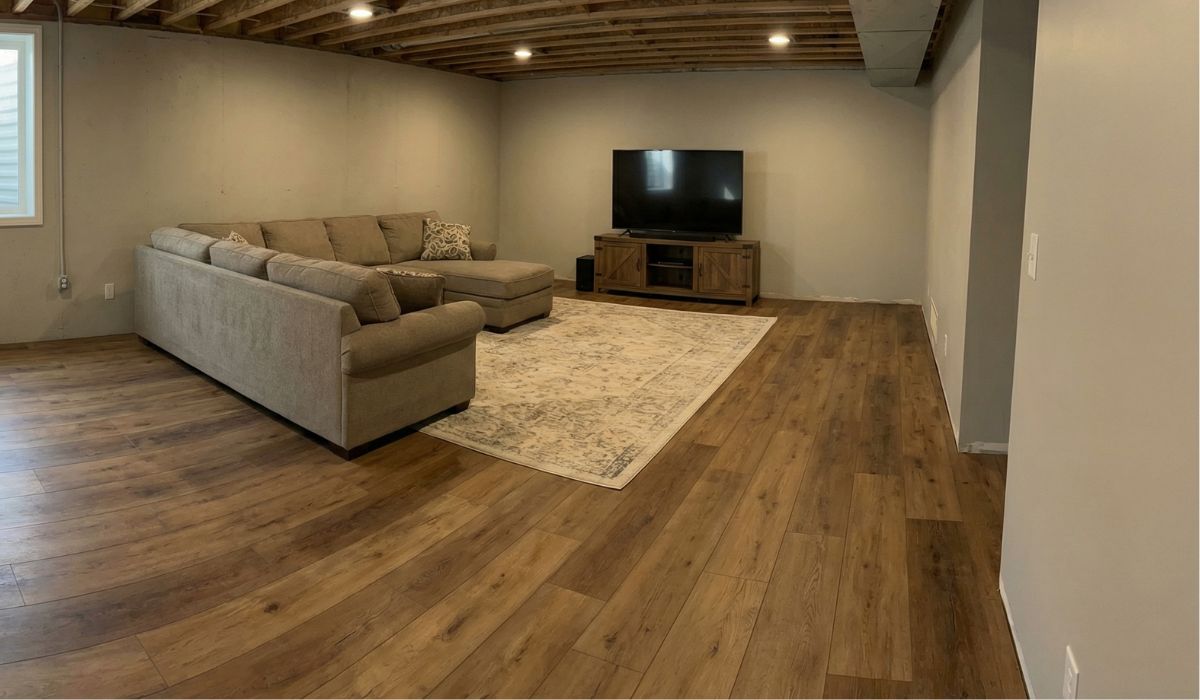
If you ask most flooring professionals what they'd put in their own basement, the answer is LVP — and it's not close. Luxury vinyl plank checks every box for a below-grade installation in Ontario's climate.
Why LVP Wins for Basements
- 100% waterproof — SPC (Stone Polymer Composite) core can sit in standing water without damage. If your basement floods, you pull up the planks, dry the slab, and click them back together.
- Installs directly over concrete — no plywood subfloor needed. Just a thin vapour barrier underlayment and you're good to go.
- Warm underfoot — especially WPC (Wood Polymer Composite) options with attached cork or foam backing. A major upgrade from bare concrete.
- Thin profile (4–7mm) — preserves precious ceiling height in GTA basements where every inch counts.
- Mold-proof — LVP is fully synthetic. It doesn't support mold or mildew growth, even in damp conditions.
- Scratch-resistant — ideal if your basement is a playroom, home gym, or entertainment space.
What to Look For
Not all LVP is created equal. For a basement installation in Ontario, look for these specs:
- SPC core (not WPC) if flooding is a concern — SPC is more rigid and dimensionally stable in standing water
- 20 mil+ wear layer for residential durability
- Attached underlayment with a built-in vapour barrier — simplifies installation and prevents moisture from being trapped between slab and flooring
- Embossed-in-register (EIR) texture for the most realistic wood-look finish
Cost
LVP for a basement typically runs $4 to $8 per square foot installed in the GTA. For a 500 square foot basement, that's $2,000 to $4,000 — making it the best value for a waterproof, good-looking floor.
Option 2: Engineered Hardwood — Premium Look, With Conditions
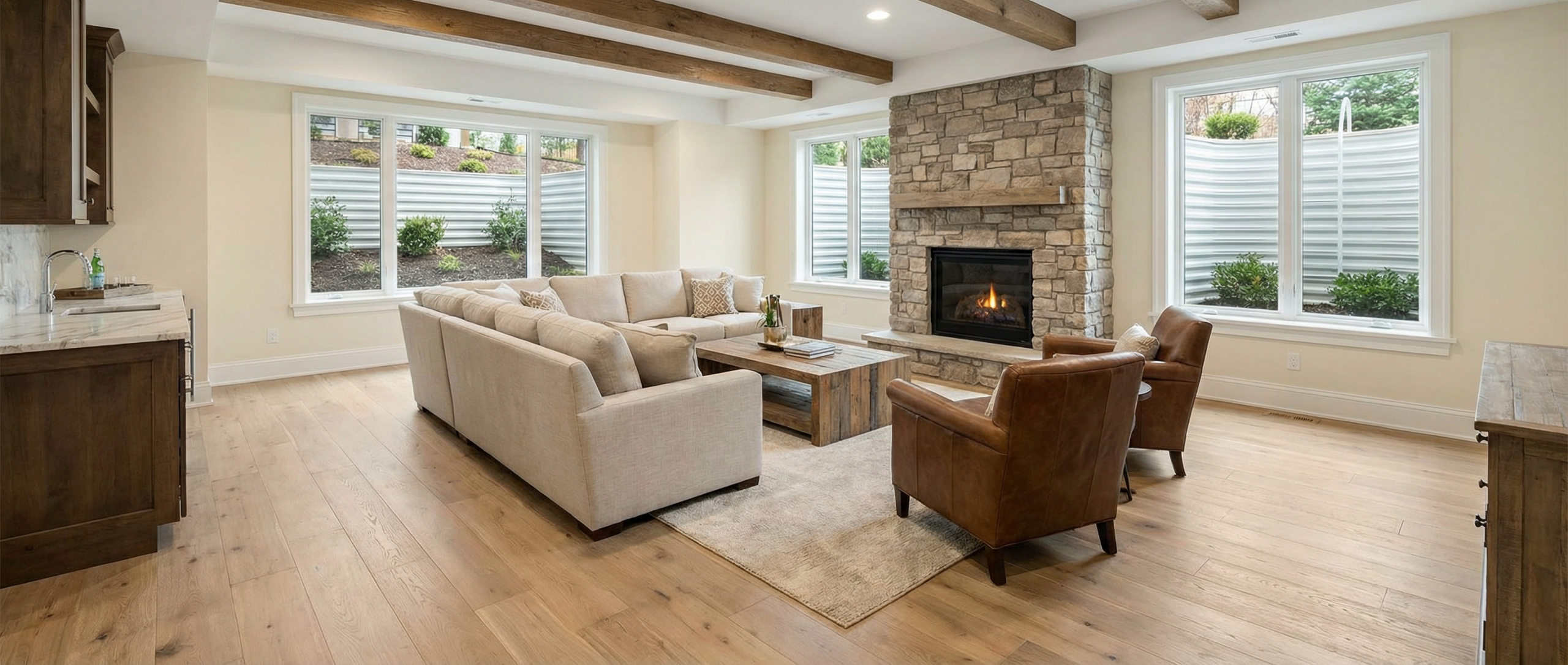
If you want your basement to feel like an extension of your main floor — especially if you have hardwood upstairs and want a seamless flow — engineered hardwood is a viable option. But it comes with important conditions.
When Engineered Hardwood Works in a Basement
- Your basement has been professionally waterproofed (interior drainage, sump pump, sealed walls)
- A moisture test of the concrete slab passes (below 3 lbs per 1,000 sq ft on a calcium chloride test)
- You maintain indoor humidity between 35% and 55% year-round
- You accept that a flood event means full replacement — engineered hardwood cannot survive standing water
When to Avoid It
Don't put engineered hardwood in your basement if you've had any history of water intrusion, if your sump pump is older or unreliable, or if the basement tends to feel damp in summer. And never install solid hardwood in a basement — no reputable installer will do it. Solid wood will cup, crown, and buckle in a below-grade environment.
Cost
Engineered hardwood in a basement runs $8 to $16 per square foot installed in the GTA. For a 500 square foot basement, expect $4,000 to $8,000. You're paying a premium for the real-wood look and feel, but you're also taking on more moisture risk.
Option 3: Laminate — Budget-Friendly, But Know the Limits
Modern laminate has improved significantly — waterproof and water-resistant versions are now widely available, and the visual realism is better than ever. It's a reasonable choice if you're finishing a basement on a tight budget and your space stays dry.
The Case for Laminate
- Affordable — $3 to $7 per square foot installed, the lowest cost option with a wood look
- Good scratch resistance — AC4 and AC5 rated laminate handles heavy traffic, pets, and kids
- Decent realism — modern high-definition printing produces convincing wood-grain patterns
- Easy to install — click-lock floating system, same as LVP
The Catch
Most laminate is water-resistant, not waterproof. That's an important distinction. Water-resistant means it can handle minor spills for 24 to 72 hours before the core begins to swell. Waterproof means it can sit in standing water indefinitely without damage.
If your basement floods — even a minor one — standard laminate is done. The core swells, the planks buckle, and there's no fixing it. You'll need a full replacement. Some premium waterproof laminate lines exist, but they approach LVP pricing at that point, which raises the question: why not just go with LVP?
Cost
Laminate for a basement runs $3 to $7 per square foot installed in the GTA. For a 500 square foot basement, that's $1,500 to $3,500. If budget is your primary concern and your basement is consistently dry, it's a workable option.
We'll assess your basement's moisture levels and recommend the right material.
Free in-home estimates across the GTA — no pressure, no obligation.
Get Your Free Quote →What to Avoid in an Ontario Basement
Some flooring materials that work well upstairs are a bad idea below grade. Here's what to steer clear of:
❌ Solid Hardwood
Will expand, contract, cup, and buckle in a basement environment. No reputable installer in the GTA will put solid hardwood below grade. Don't let anyone convince you otherwise.
❌ Wall-to-Wall Carpet
Traps moisture between the fibres and the concrete slab, creating a breeding ground for mold and mildew — especially in Ontario's humid summers. If you want softness, use washable area rugs over waterproof flooring instead.
❌ Bamboo Flooring
Despite marketing claims, bamboo is highly susceptible to moisture damage. It behaves similarly to solid hardwood in a basement — it swells, warps, and promotes mold growth in damp conditions.
❌ Standard (Non-Waterproof) Laminate
Traditional laminate cores swell permanently when exposed to moisture. If you go laminate, make sure it's specifically rated as waterproof — not just water-resistant.
Before You Install: The Moisture Question
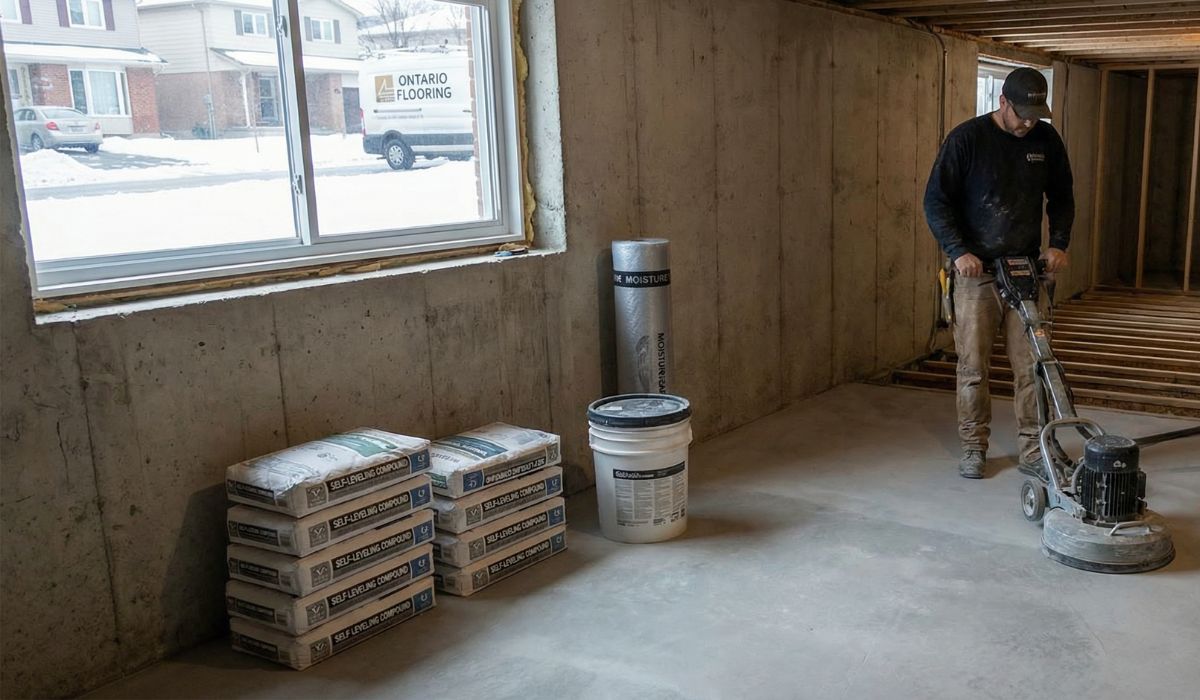
No matter which material you choose, addressing moisture first is non-negotiable. Installing any flooring over a damp concrete slab — even waterproof LVP — risks trapping moisture underneath and creating mold problems you can't see.
Here's what a proper basement floor prep looks like:
- Visual inspection: Check for visible cracks, staining, efflorescence (white mineral deposits), or damp spots on the concrete.
- Moisture test: A calcium chloride test or relative humidity test will tell you exactly how much moisture is coming through the slab. Your installer should do this before quoting.
- Address any issues: Cracks should be sealed, drainage problems fixed, and sump pumps tested before any flooring goes down.
- Vapour barrier: A 6-mil polyethylene vapour barrier or underlayment with a built-in moisture barrier should be installed between the concrete and the flooring.
💡 Pro Tip: If you're told you don't need a moisture test, find a different installer. It takes 10 minutes, and skipping it is the number one cause of basement flooring failures in the GTA. At Flooring Office, we include moisture assessment as part of every basement quote.
Our Recommendation: The Hybrid Approach
For most GTA homeowners, the smartest move is what we call the hybrid approach:
- Hardwood on the main floor and stairs — maximum resale value and visual impact where it matters most
- LVP in the basement — waterproof protection, warm underfoot, and realistic wood-look that complements the hardwood upstairs
This combination gives you the premium feel on your main level while keeping the basement protected from moisture. Many of our GTA clients choose an LVP colour that closely matches their upstairs hardwood for a cohesive look throughout the home.
For a detailed comparison of LVP and hardwood beyond just basements, check out our full guide: LVP vs Hardwood Flooring: Which Is Right for Your GTA Home?
And if you're budgeting for the hardwood portion, our cost breakdown has everything you need: How Much Does Hardwood Flooring Installation Cost in the GTA? (2026 Guide)
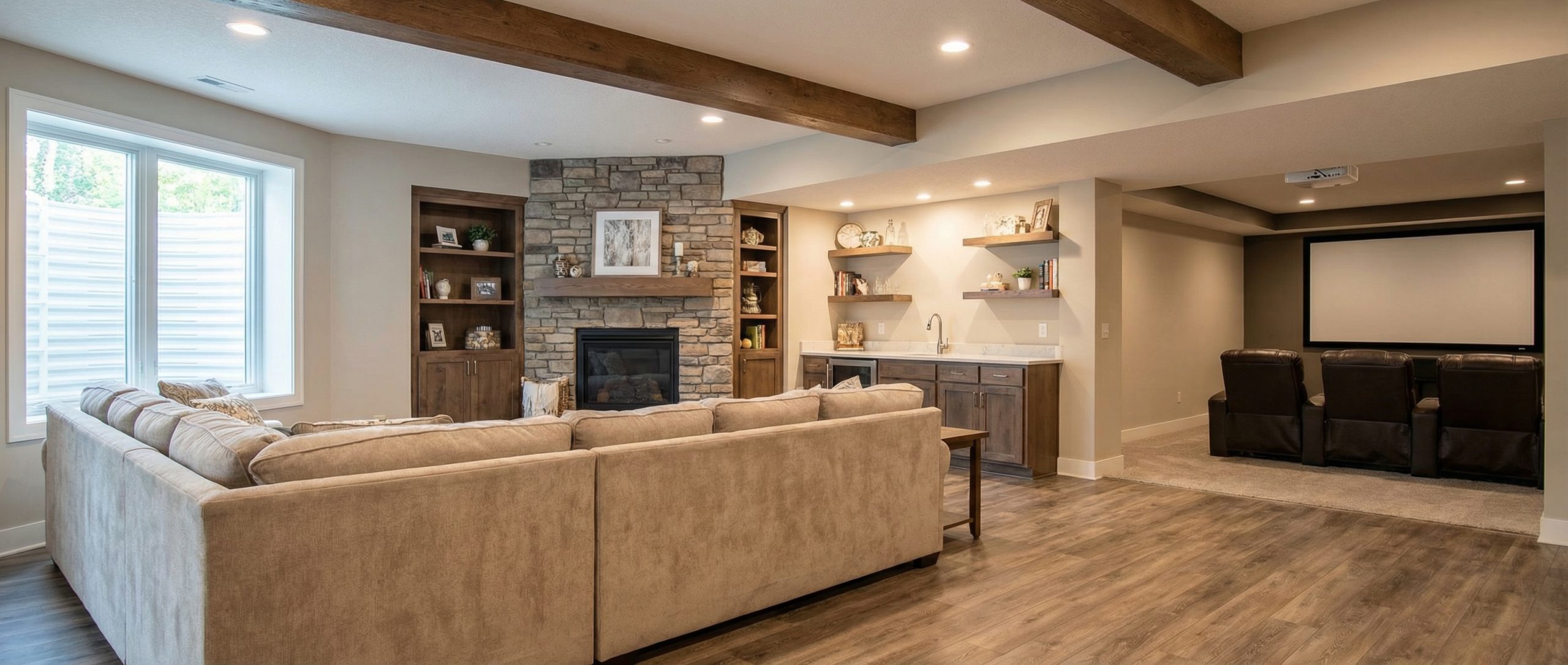
Get the Right Floor for Your Basement
Every basement is different. Moisture levels, how you plan to use the space, your budget, and even your ceiling height all play into the right choice. The only way to know for sure is to have a professional look at your specific situation.
At Flooring Office, we serve North York, Woodbridge, Vaughan, Etobicoke, Richmond Hill, Markham, Mississauga, Brampton, and the entire GTA. We'll assess your basement, test moisture levels, and give you a transparent quote — no surprises.
Get an accurate quote for your basement flooring project.
North York · Woodbridge · Vaughan · Etobicoke · Richmond Hill · Markham · Mississauga · Brampton
Get Your Free Quote →